Châteaux in the Dordogne: France’s Most Beautiful Fortresses
Châteaux in the Dordogne: France’s Most Beautiful Fortresses
The Dordogne Valley is often referred to as the ‘Valley of the 5 Châteaux’. This scenic stretch features five historic châteaux visible from the river or nearby viewpoints, many dating from the Hundred Years’ War era. The two most impressive are Château de Beynac and Château de Castelnaud, among the most visited in France, with dramatic cliffside settings and panoramic river views. Here is a guide to the most remarkable châteaux across the Périgord.
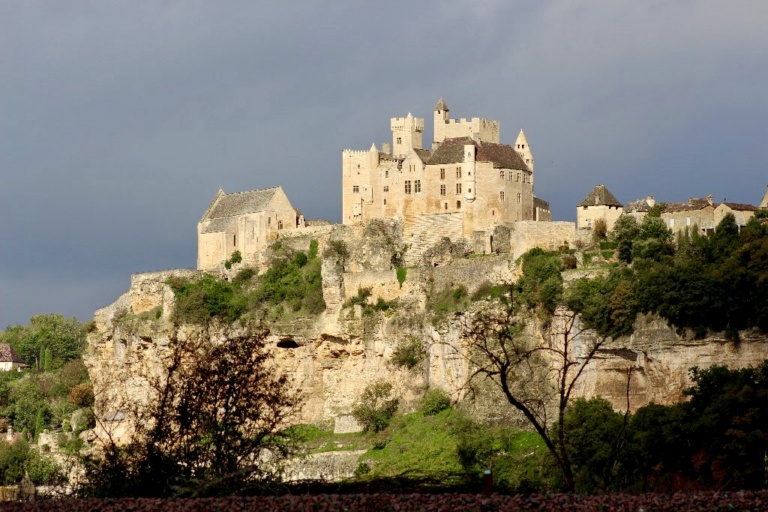
Château de Beynac
Château de Beynac is one of the most dramatic and best-preserved medieval fortresses in France, perched on a 150-metre cliff directly above the Dordogne River.
History: Built in the 12th century, Beynac was a key stronghold of the barons of Beynac loyal to the French crown. Never successfully besieged thanks to its three layers of defensive walls.
Highlights: Imposing keep and ramparts, the Hall of the Estates of Périgord, medieval kitchens, oratories with 15th-century frescoes, and panoramic valley views.
Fun fact: Used as a filming location for The Messenger: The Story of Joan of Arc and Robin Hood.
- ★ 12th-century cliff-top fortress
- ★ Panoramic views over Dordogne Valley
- ★ Medieval rooms and kitchens
- ★ Filming location for movies
Château de Castelnaud
Château de Castelnaud is a superb medieval military fortress facing its historic rival, Beynac, across the river. It now houses an outstanding museum of medieval warfare.
History: Built in the 12th century, Castelnaud was a major English stronghold during the Hundred Years’ War. It houses over 250 authentic weapons and siege engines.
Highlights: Museum of medieval warfare, full-scale siege engine demonstrations with live firings, armour and weapons displays.
Fun fact: Castelnaud was English-held while Beynac was French — historic rivals visible across the river.
- ★ 12th-century military fortress
- ★ Museum of medieval warfare
- ★ Siege engine demonstrations
- ★ Views of Beynac château
Château des Milandes
Château des Milandes is a Renaissance château famous as the former home of the legendary entertainer Josephine Baker, with elegant gardens and falconry displays.
History: Built in 1489 in Flamboyant Gothic style. Josephine Baker lived here from 1947 to 1968 with her twelve adopted children from around the world.
Highlights: Josephine Baker museum with costumes and memorabilia, formal gardens, daily birds of prey demonstrations.
Fun fact: Baker adopted 12 children of different nationalities — her “Rainbow Tribe” — to prove people of all races could live in harmony.
- ★ Former home of Josephine Baker
- ★ Costumes and memorabilia museum
- ★ Formal gardens
- ★ Birds of prey shows
Château de Hautefort
Château de Hautefort is a magnificent Renaissance château with formal French gardens, classified among the Notable Gardens of France.
History: Transformed from a medieval fortress into an elegant classical residence in the 17th century. Devastated by fire in 1968 and meticulously rebuilt.
Highlights: Elegant classical architecture, formal French gardens, immersive 360-degree experience of the 1968 fire.
Fun fact: The château was rebuilt almost entirely after the 1968 fire using original plans and traditional techniques.
- ★ Renaissance château architecture
- ★ Formal French gardens
- ★ 360-degree immersive experience
- ★ Remarkable restoration story
Château de Biron
Château de Biron is one of the largest and most imposing castles in the Dordogne, blending medieval, Gothic, and Renaissance architecture.
History: Built in the 12th century by the Barons of Biron and expanded over centuries. The largest château in Nouvelle-Aquitaine.
Highlights: Massive keep and ramparts, stunning Gothic chapel, Renaissance apartments, panoramic 360-degree views.
Fun fact: Used as a filming location for The Three Musketeers and Ever After.
- ★ Largest château in Nouvelle-Aquitaine
- ★ Gothic chapel and Renaissance apartments
- ★ Panoramic hilltop views
- ★ Filming location
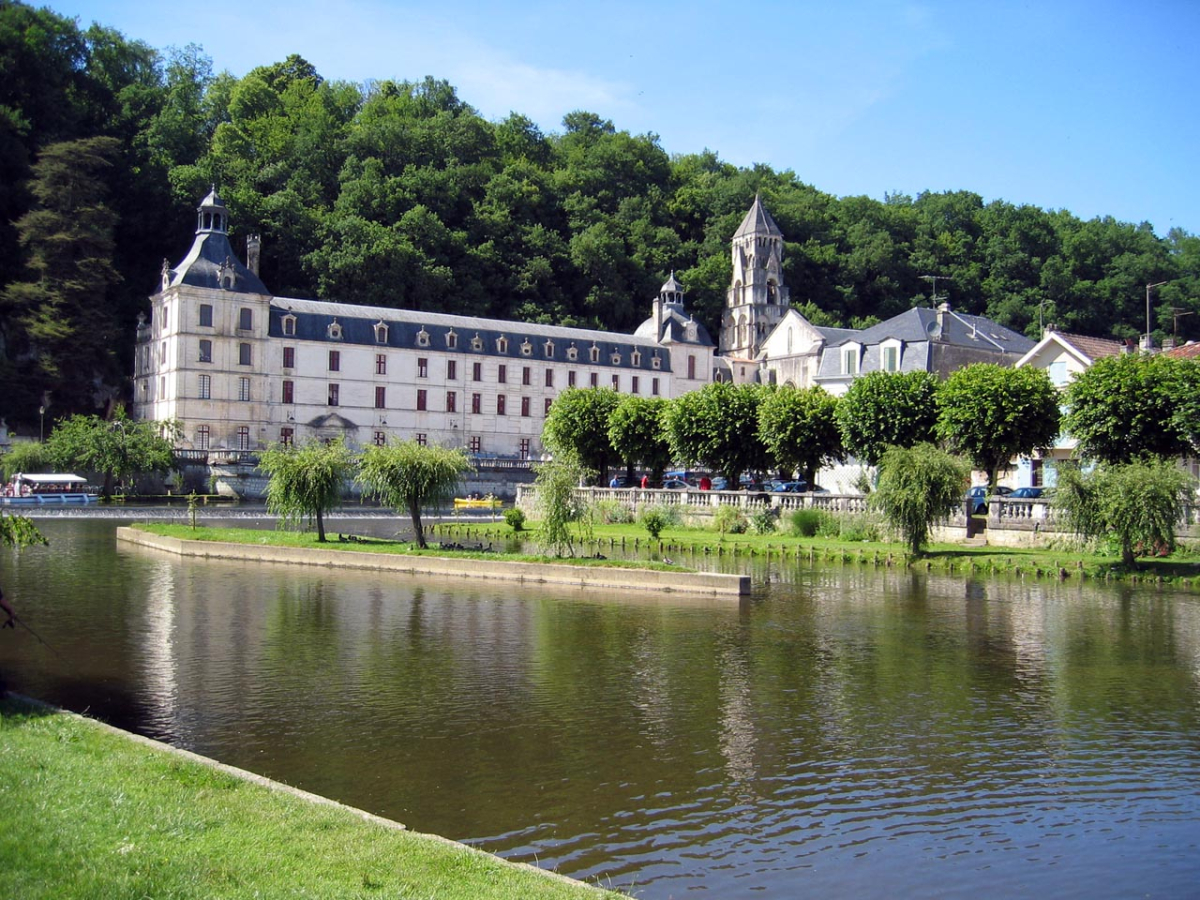
Château de Bourdeilles
Château de Bourdeilles uniquely unites a 13th-century medieval fortress with a 16th-century Renaissance palace on a single rocky terrace.
History: One of the four baronies of Périgord. The octagonal keep is one of the tallest in France at 35 metres. The Renaissance wing was added in the 16th century.
Highlights: 35-metre octagonal keep, Renaissance palace with painted ceilings, Algi Collection of antique furniture (15th–19th centuries).
Fun fact: The octagonal keep is one of the tallest medieval towers in France, offering exceptional views over the Dronne Valley.
- ★ 13th-century octagonal keep
- ★ Renaissance palace
- ★ Prestigious furniture collection
- ★ Panoramic Dronne Valley views
Château de Commarque
Château de Commarque is a ruined medieval fortress with prehistoric caves hidden beneath it — one of the most atmospheric sites in the Dordogne.
History: Built in the 11th century, abandoned in the 18th century. Restoration revealed prehistoric caves showing continuous human occupation for 15,000 years.
Highlights: Ruined towers and walls, prehistoric caves, troglodyte dwellings, remote valley setting.
Fun fact: The only château in the Dordogne rated 3 stars in the Michelin Green Guide.
- ★ Ruined medieval fortress
- ★ Prehistoric caves
- ★ Atmospheric valley setting
- ★ Michelin 3-star rated
Château de Fénelon
Château de Fénelon is a medieval fortress with Renaissance additions, birthplace of the famous writer and theologian Fénelon.
History: Built in the 12th century, birthplace in 1651 of François de Salignac de La Mothe-Fénelon, whose book Télémaque influenced European literature.
Highlights: Medieval keep and ramparts, Renaissance interiors with period furniture, museum dedicated to Fénelon’s life, arms collection.
Fun fact: Classified as a “Maison des Illustres” and member of the “Grands Sites du Périgord”.
- ★ 12th-century medieval origins
- ★ Renaissance interiors
- ★ Birthplace of writer Fénelon
- ★ “Maison des Illustres”
Château de Jumilhac
Château de Jumilhac is a fairy-tale castle with conical towers and steep roofs, known as the “Pearl of the Green Périgord”.
History: Built in the 13th century, expanded during the Renaissance. Associated with the legend of Louise de Hautefort, imprisoned for thirty years.
Highlights: Conical towers and alchemical roof symbols, the legend of the spinning lady, formal gardens, gold panning on the river Isle.
Fun fact: The roofs are adorned with intricate alchemical symbols — each finial tells the story of a stage in the “Great Work”.
- ★ Fairy-tale conical towers
- ★ Spinning lady legend
- ★ Formal gardens
- ★ “Pearl of the Green Périgord”
Planning a Dordogne trip? Browse all guides →